


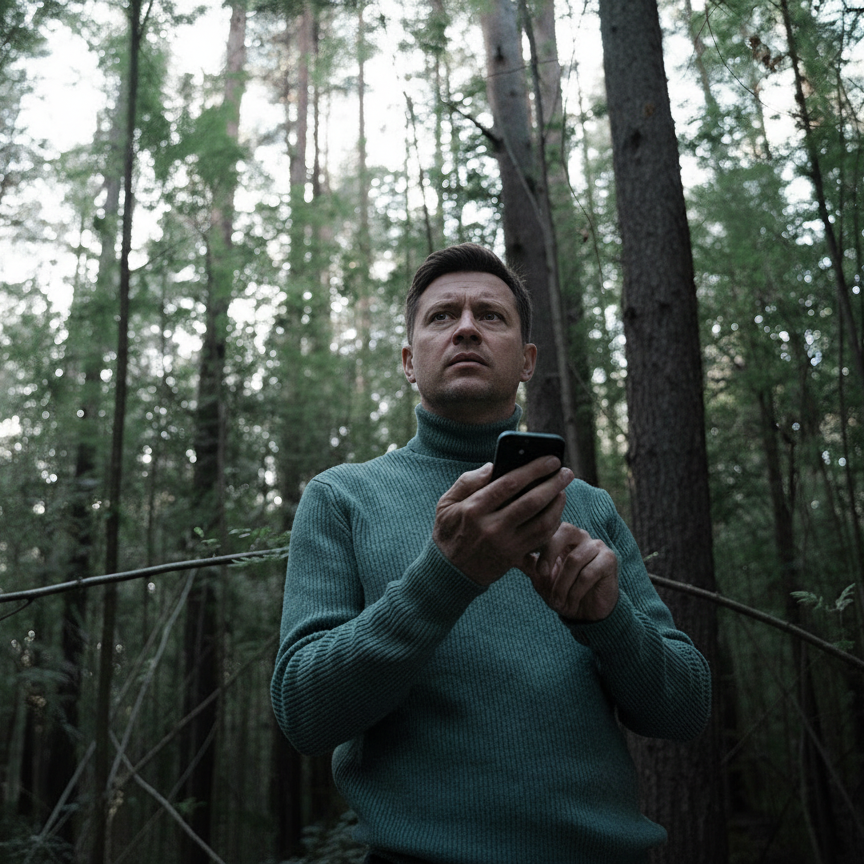

Luck makes headlines. Preparation writes survival stories.
There’s a certain mythology around survival. We call the ones who make it out “lucky.” Lucky the rock shifted just enough. Lucky the storm broke. Lucky someone heard the signal. But the deeper you look into real survival stories, the less luck has to do with it. Again and again, what carries someone through isn’t chance. It’s what they brought. What they knew. What they were willing to do when there were no good options left. Preparedness isn’t paranoia. It’s strength under control. And when things turn bad, it’s the difference between a story and a statistic.
127 Hours — The Tool in His Pocket

April 2003. Bluejohn Canyon, Utah.
Aron Ralston was moving through a narrow slot canyon when a dislodged 800-pound boulder pinned his right arm against the rock wall. No one knew exactly where he was. No one was coming.
For five days, he rationed water. Tried to chip away at the stone. Tried to lift it. Nothing moved.
What he did have was a small multi-tool — not a rescue kit, not a medical pack, just an everyday tool. It wasn’t designed for what he ultimately used it for.
On the fifth day, with dehydration setting in and no sign of relief, Ralston made a decision that would become one of the most documented acts of self-rescue in modern history: he amputated his own arm, then rappelled down a 65-foot drop and hiked out to find help.
The moment is remembered for its brutality. But step back from the shock of it and something else becomes clear — he had tools. He understood how to use them. And when faced with the unthinkable, he acted.
Read more: The Guardian – True Story Behind the Film 127 Hours
84 Days in Alaska — Three Tools and a Frozen Wilderness

November 1943. Interior Alaska.
Lieutenant Leon Crane was the sole survivor of a B-24 bomber crash during a World War II training mission. The wreckage scattered. The cold closed in fast.
He was alone in subzero conditions with almost nothing: a Boy Scout knife, two packs of matches, and his parachute canopy.
Crane built shelter from the parachute. Maintained fire with care bordering on obsession. Trapped and rationed what he could. Navigated slowly toward a river system he believed would eventually lead to civilization.
He survived for 84 days.
Not because Alaska softened. Not because someone stumbled onto him.
Because he made deliberate use of what he had, conserved energy, managed risk, and refused to panic when the margin for error was razor thin.
Minimal gear. Maximum discipline.
Read more: National Parks Service – The Leon Crane Survival Story
Above 13,000 Feet — One Signal That Changed Everything

July 2025. Eastern Sierra, California.
A solo climber ascending Mount Williamson fell off-route near the West Chute; the fall shattered her leg. Her backpack, containing most of her supplies, was gone.
No cell service. No nearby hikers. Just exposure, pain, and altitude.
What she still had within reach was a satellite SOS device. Small. Compact. Easy to dismiss as unnecessary weight on most trips.
That signal set in motion a complex rescue operation involving multiple aircraft and coordinated ground teams. Weather complicated extraction. Terrain slowed progress. It took nearly a full day before she was lifted to safety.
Without that simple device, the mountain likely would have kept her.
A deliberate decision became the difference between rescue and isolation.
Read more: L.A. Times – Mount Williamson Rescue
The Pattern
Three different decades. Three different environments. Three very different outcomes.
What connects them isn’t drama. It isn’t toughness as theater. It isn’t blind optimism.
It’s readiness.
Each of them carried something that mattered, but tools alone don’t save anyone. The edge comes from knowing the right time to use them. From thinking ahead. From assuming that nature won’t negotiate.
Luck is unpredictable. It can’t be packed. Preparation can.
And when things go the wrong way, a rock shifts, an engine fails, or your footing gives out — the men and women who walk away from these scenarios aren’t the fortunate ones.
They’re the ones who thought ahead.
Want More Content Like this Sent to Your Inbox?



Leave a comment
All comments are moderated before being published.
This site is protected by hCaptcha and the hCaptcha Privacy Policy and Terms of Service apply.