


My glove box used to be a junk drawer on hinges, packed with old receipts, expired paperwork, napkins, soy sauce packs, half a snapped pencil, and a dry marker. Then a bad motivator left me stranded beside an unlit road with no flashlight and nothing in reach that could help. By the time I’d gotten home, the glove box had a new job: hold the few things that might keep a small problem from becoming a long night.

What tools you should carry in your glove box comes down to a short list: your registration and insurance, a small notepad and dependable pen, a compact flashlight, a few small hand tools like pliers and scissors, duct tape, spare fuses, and compact multipurpose tools such as Adventure Cards. For anyone who camps, works on things, takes the back roads, or simply prefers to be prepared, this guide covers what deserves a spot up front and how to keep it organized so it’s easy to use when trouble shows up.
Start With What Belongs There: Vehicle Owner's Manual
Before adding a single tool, start with the things the car glove box storage compartment is meant to hold. Besides gloves, of course.
Current vehicle registration and proof of insurance, along with your insurance card, should stay near the top in a waterproof envelope, where they can be reached without digging. The vehicle manual can sit near the bottom. It’s important to have, and the owner's manual is useful for guidance on repairs or dashboard warning lights, but since it lies flat and isn’t referenced often, it makes a solid base for everything else. Don’t overload it with extra clutter.

Something to Write With
A small note pad and a dependable pen belong near the top of the glove box.
A Field Notes memo book is sturdy, small enough to fit in a pocket when it’s needed, and inexpensive enough that tearing out a page to exchange details after an accident or leave a note doesn’t hurt. The Builder’s Pen pairs well with it because it combines a regular pen with several small tool functions and an LED light in the tip.
Both can stay near the vehicle registration where they’re easy to reach, with a slim pad handy for quick notes.
Pro tip: Write emergency contacts and key phone numbers inside the front cover as a backup. If the cell phone dies or loses signal, the information is still easy to find.

A Reliable Light
A compact flashlight should stay near the front of the glove compartment rather than buried beneath paperwork, because it is essential in an emergency situation at night when you need clear visibility fast.
The Pocket Lantern provides a focused beam for looking beneath the car, helps you inspect under the hood, and can illuminate roadside problems in the dark or flag someone down at night. That makes it a solid dedicated vehicle flashlight to carry.
Pro tip: Battery-powered lights have an advantage over rechargeable models: fresh batteries can be stored in the car. The light doesn’t have to depend on a car charger, which is especially handy when the vehicle battery may already be part of the problem, and don’t forget a dedicated light even if another tool has a small LED.

Small Hand Tools: Tire Pressure Gauge
A full mechanic’s kit doesn’t need to live in the glove box. Larger tools belong in the trunk, but a few compact tools up front can help with minor repairs or adjustments around the cabin while bigger gear stays in back. In an emergency, that small setup can make the difference between waiting for help and getting back on the road.
The Little Grippy provides pliers, screwdrivers, and wire cutters, and this kind of compact multi-tool fits easily in a glove compartment. Survival Snips are compact folding scissors with several additional repair functions. A small roll of duct tape and a few spare fuses also earn their place, and it’s smart to replace anything you use or that has expired. A small can of WD-40 is also worth packing for loosening wheel nuts and clearing foggy headlights.
The Hobo Knife won’t do much for the car, but its fork, spoon, knife, and can opener make it handy for roadside meals.
The Thinga-Ma-Bob Carabiner Multi-Tool adds pliers, screwdrivers, a knife, and a small LED flashlight. Multi-purpose tools can also assist with minor repairs or quick adjustments inside the car when the larger flashlight isn’t needed.
Pro tip: Wrap a few feet of duct tape around an old gift card instead of carrying the whole roll. It stays flat, takes up almost no room, and gives you enough for temporary fixes on or inside a car.
Adventure Cards
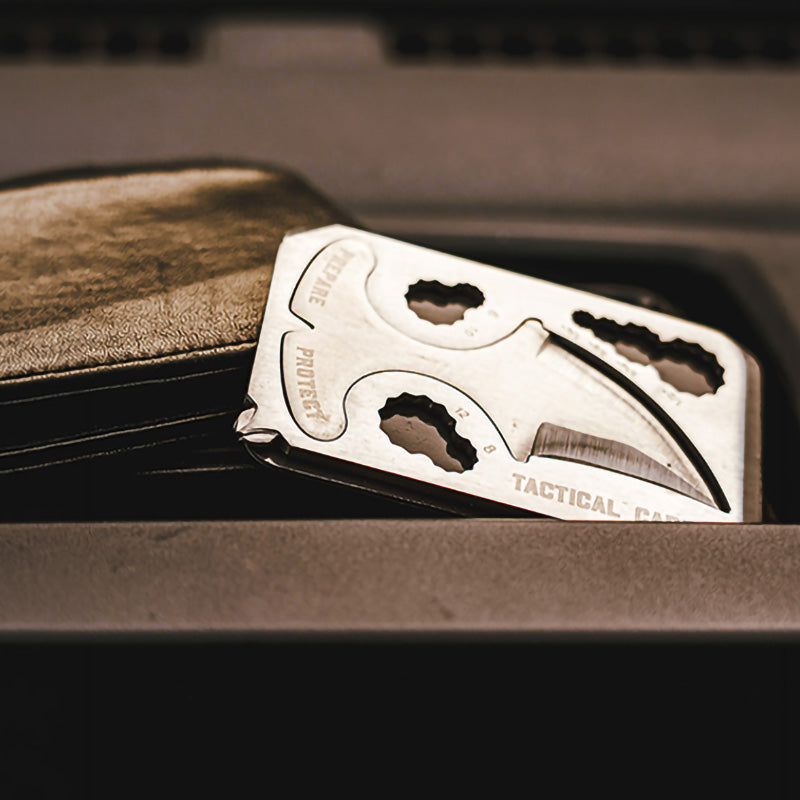
Adventure Cards aren’t just for the field. They pack several functions into almost no space, making them a natural fit for the glove box.
The Mini Mess Kit can help with an unplanned meal, while the Glow Grip Card makes small items easier to locate after dark. The Jack Comb handles quick cleanups, and the Stinger Card adds another layer of emergency utility without taking up much room.
The entire collection doesn’t need to stay in the car. Two or three cards can be chosen according to driving conditions, usual destinations, and likely roadside needs.
Pro tip: Keep Adventure Cards in a Pocket Survival Tin or an old Altoids tin for better organization.
Other Glove Box Essentials: First Aid Kit
A well-stocked glove box helps you manage roadside problems safely. The remaining space can hold a tire pressure gauge to check pressure anytime and keep tires properly inflated, a mini first aid kit for minor injuries and emergencies, hand sanitizer, wet wipes, a microfiber towel, paper map, and work gloves.
Pack non-perishable snacks for emergency fuel during unexpected delays.
Spare batteries and fuses should stay nearby, along with an extra brake-light bulb. An ice scraper is also a good thing to have if driving in a cold climate.
Larger equipment should remain in the trunk, including jumper cables, the jack, a lug wrench, emergency flares for visibility during a break down, and the spare tire.
Keep an emergency escape tool within reach of the seat, not buried under it; one that combines a seatbelt cutter and glass tip can help break a window after an accident or if you get a flat tire.
Check It Twice a Year
Go through the glove box twice a year and clear out anything expired, dead, dried up, or no longer useful so your glove box survival kit still works when you need it. It also helps to stash a small amount of cash for emergencies when cards are not an option. Restock the basics before they’re needed, make sure the documents are current, and check that the flashlight has fresh batteries with a few spares nearby in case of a dead battery.
A good glove box isn’t packed with everything. It’s stocked with the few things that matter when the road decides to make trouble or when a handy tool needs to be close at hand. Just don’t store valuables there, since the glove box can be an easy target for theft. Focus on what to keep in your glove so the essentials are ready when you need them.
Want More Content Like This Sent to Your Inbox?



Leave a comment
All comments are moderated before being published.
This site is protected by hCaptcha and the hCaptcha Privacy Policy and Terms of Service apply.