


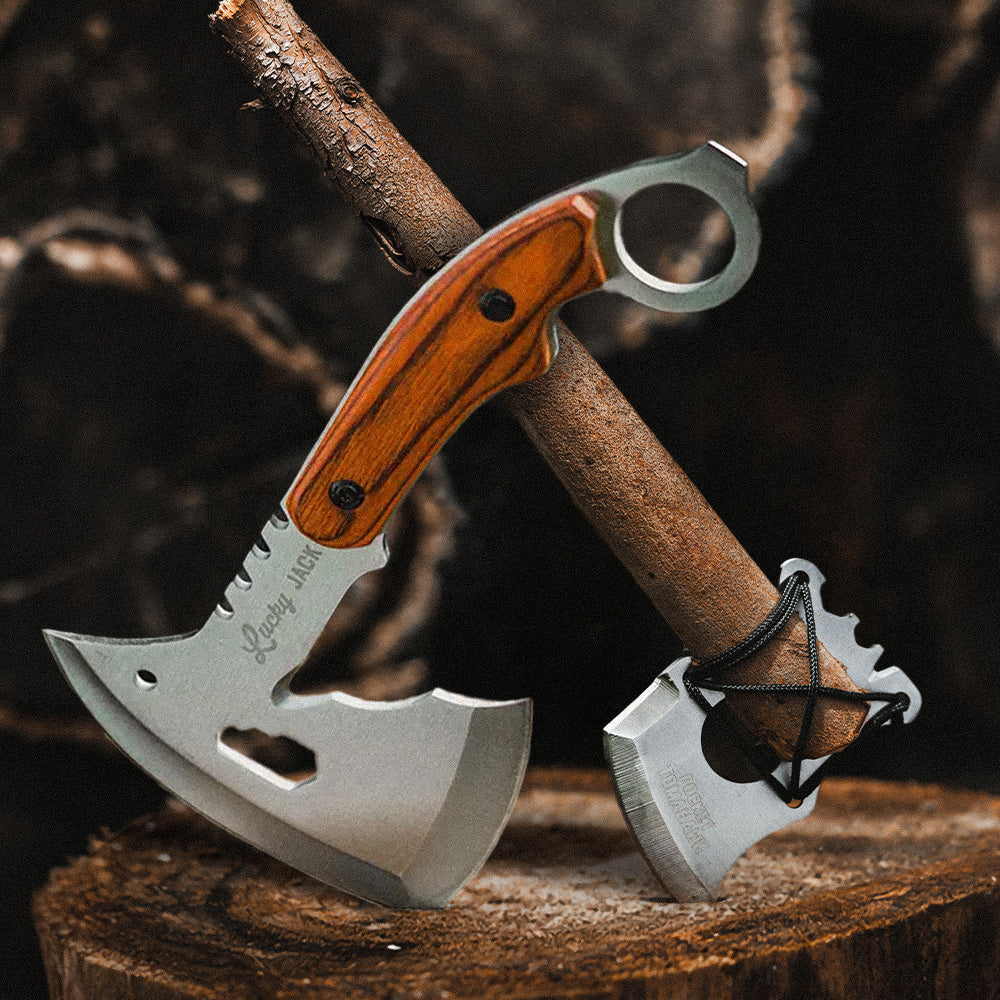
A camping hatchet can earn its place quickly. It can split firewood, knock down kindling, and handle the heavier jobs around camp. It can also spend an entire trip strapped to your pack without being touched.
That matters when every ounce has to earn the ride.
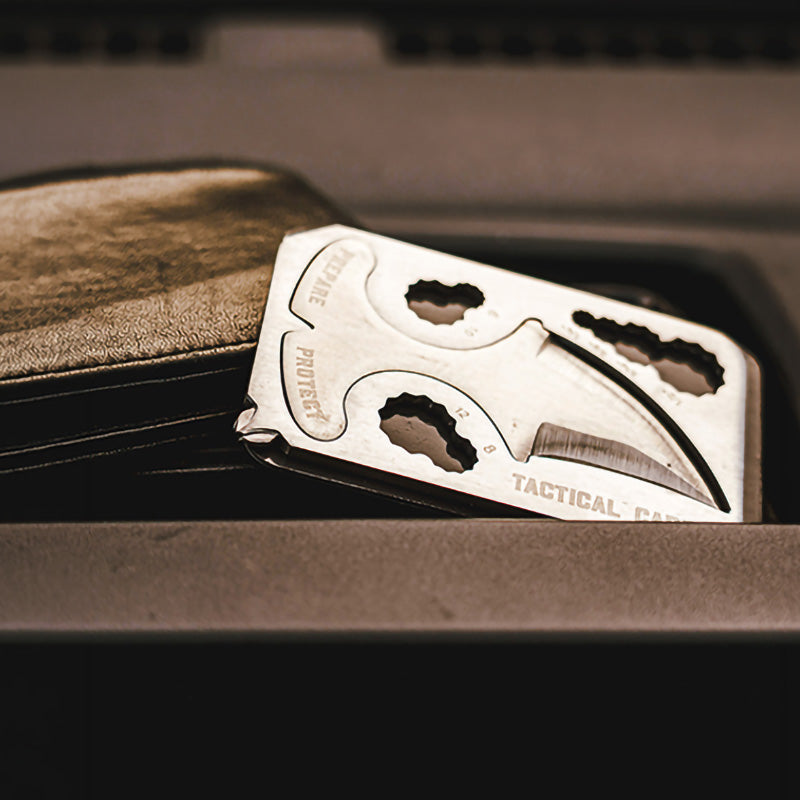
The Pocket Tomahawk takes the opposite approach. Carry the steel, find the handle when you need one, and leave the extra weight behind. At 3 ounces, it stays flat in your kit until there is work to do.
It is not a miniature axe pretending physics no longer applies. It is a compact chopping edge built for lighter camp work, emergency carry, and trips where every ounce has to earn the ride.
So the better question is not whether a Pocket Tomahawk can replace every hatchet.
It is whether you need the hatchet in the first place.
What Is a Pocket Tomahawk and Its Axe Head?
The Pocket Tomahawk starts with a simple idea: it is a compact version of a traditional camp axe, designed for light camp jobs and emergency situations when having a cutting edge on hand matters more than carrying a full-size tool.
Instead of hauling an axe head permanently attached to a wood or composite handle, the sharpened blade travels flat and weighs just 3 ounces. On its own, the edge can handle smaller camp tasks like cutting cord, shaving tinder, scraping bark, trimming small twigs, or starting simple notches.
When more leverage is needed, the included paracord lets you lash it to a suitable branch and turn it into a temporary working hatchet.
That trade comes with one obvious difference.
A conventional camping hatchet is ready the second it leaves the sheath. The Pocket Tomahawk takes a little setup before you can swing it like one. In return, you are not carrying a handle through miles of country already full of potential handles.
For backpackers, campers, and anyone trimming weight from a camp kit, that starts to make sense.

Turning It Into a Working Camp Tool
Start with the handle.
Look for a sturdy fallen branch that is straight enough to control, comfortable to grip, and long enough to keep the blade clear of your hand. Avoid anything rotten, cracked, or flexible.
Set the Pocket Tomahawk at the end of the branch and lash it tightly with the included paracord. The blade should feel locked in place. If it shifts, twists, or rocks, stop and redo the lashing.
Begin with short, controlled swings on light material. Once everything feels secure, keep your hands and legs clear of the swing path and work against a stable chopping surface.
Afterward, undo the lashing, clean and dry the steel, and return the Pocket Tomahawk to your pack. No wooden handle to carry back out.
Pocket Tomahawk vs. Coyote Camp Axe
Put the Pocket Tomahawk beside the Coyote Camp Axe and neither one wins every category.
| Factor | Pocket Tomahawk | Coyote Camp Axe |
|---|---|---|
| Weight | 3 oz | 12 oz |
| Pack space | Flat, 3.5 x 2 inches | Compact fixed-handle axe |
| Price | $22 | $40 |
| Setup | Lash to a field-cut handle | Ready immediately |
| Best suited for | Kindling, notching, light camp work, emergency carry | Splitting wood and repeated chopping |
| Weight difference | 9 oz lighter | More weight, more ready-to-swing capability |
The Coyote Camp Axe wins on convenience and force. Its fixed handle is ready immediately, and the larger setup gives you more leverage for repeated chopping.
The Pocket Tomahawk wins before the work even begins.
The Coyote Camp Axe is already light for a camp axe at 12 ounces. The Pocket Tomahawk cuts that down to 3 ounces and takes up considerably less room. That changes the question from “Which chops harder?” to “How much chopping am I planning to do?”
That is the comparison that matters.

Where the Pocket Tomahawk Makes Sense for Splitting Kindling
Most backpacking campfires do not begin with someone dropping a tree.
They begin with small wood.
That is where the Pocket Tomahawk fits best. It can break down dry branches for kindling, trim light material, shape simple notches, and carve feather sticks when dry fire-starting material is needed. It is intended for small branches and light material, not chopping small trees.
It also makes sense as an emergency edge. A fixed-handle axe has to justify its weight and space every time the pack gets loaded. A flat 3-ounce tool is much easier to leave in the kit.
For someone building an ultralight camp kit, that distinction matters. A tool sitting at home because it did not make the packing cut is not much help on the trail.
Where the Camp Axe Still Wins
There are times when the extra nine ounces are doing exactly what you brought them to do.
If the trip involves processing firewood, clearing heavier limbs, or repeated chopping around a base camp, reach for the Coyote Camp Axe.
The fixed handle gives you better leverage and consistency when the work moves beyond an occasional camp chore. There is no branch hunting, no lashing, and no setup before the first swing.
If I knew I would spend every evening processing firewood, I would carry the Coyote Camp Axe.
If I were covering serious mileage and wanted a chopping edge available for an unexpected job, I would rather carry the 3 ounce Pocket Tomahawk.
That is why calling the Pocket Tomahawk a complete hatchet replacement misses the point.
It is a hatchet alternative for backpacking, not a magic trick.
Do You Really Need a Hatchet Camping?
Sometimes.
If wood processing is part of the plan, carry the proper tool. For heavier splitting, that may even mean stepping beyond a compact camp axe and bringing something built specifically for larger work.
For lighter trips, the math changes.
The Coyote Camp Axe weighs 12 ounces. The Pocket Tomahawk weighs 3. Over a long day on foot, nine ounces saved is nine ounces you never had to carry.
The Pocket Tomahawk works backward from that problem.
Carry the steel because making a sharpened cutting edge in the woods is difficult.
Find the handle because finding a stick usually is not.
The Verdict
If ready-to-swing chopping power is the priority, pack the Coyote Camp Axe.
If pack weight matters more and you still want an edge for kindling, light camp work, or an unexpected job, the Pocket Tomahawk makes the stronger case.
Keep either edge clean, dry, and sharp between trips. Treat an improvised handle with the same respect you would a permanent axe handle, and replace it if the wood or lashing begins to fail.
Leave the larger tool for trips that need it.
The Pocket Tomahawk is $22, weighs 3 ounces, and gives you a chopping edge without committing 12 ounces and a fixed handle to your pack.
Shop This Post

Pocket Tomahawk
3 oz Flat-pack axe blade
$22.00
Shop now →
Coyote Camp Axe
12 oz camp axe
$40.00
Shop now →Want More Content Like This Sent to Your Inbox?


Leave a comment
All comments are moderated before being published.
This site is protected by hCaptcha and the hCaptcha Privacy Policy and Terms of Service apply.