


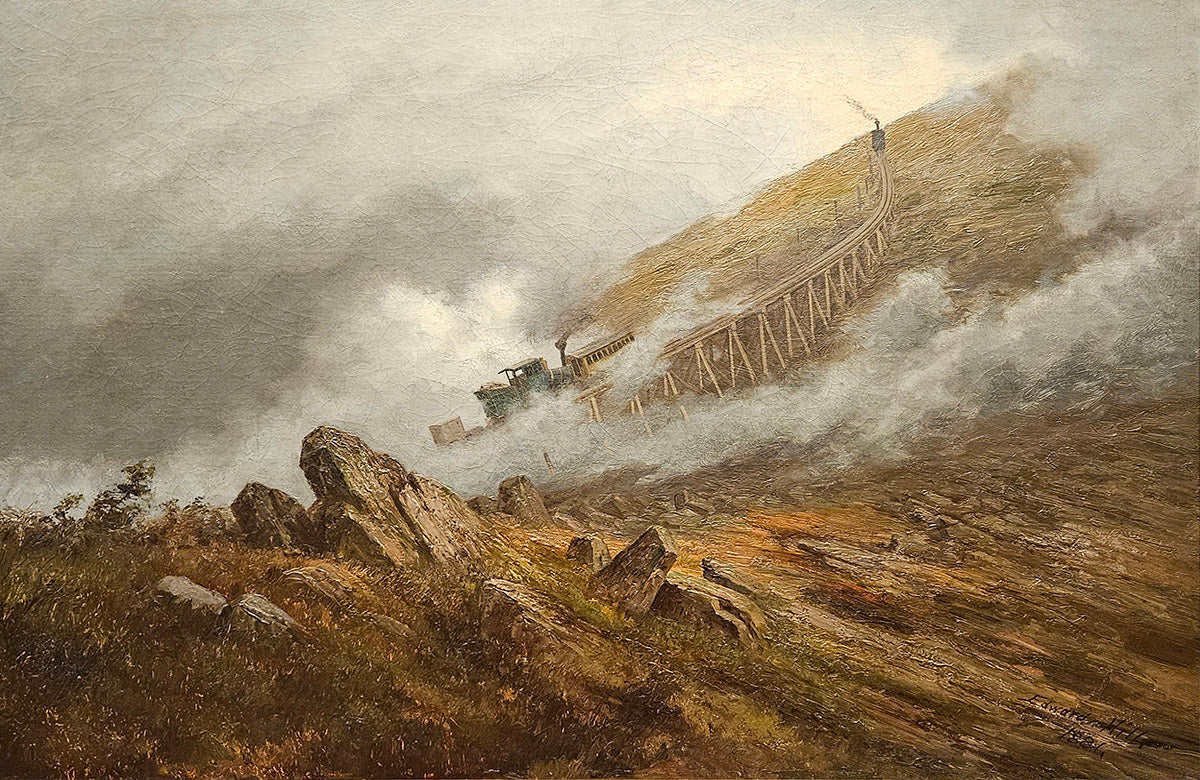
At Marshfield Base Station, the trip ahead can look straightforward. There is a train, a track and a summit waiting somewhere above the trees.
Then the Cog starts climbing.
In less than an hour, the Mount Washington Cog Railway rises nearly 3,600 feet to the 6,288-foot summit of the highest peak in the Northeast. Along the way, passengers travel through three Mount Washington climate zones: humid continental, subarctic and alpine tundra.

The mileage is short. The change is not.
For hikers, outdoor travelers and anyone riding to the summit, the Cog offers a rare cross-section of the mountain. From the train, you can watch hardwood forest narrow into spruce and fir, see wind-shaped krummholz appear near tree line, and eventually emerge onto the exposed rock and low vegetation of the alpine zone.
Three Climate Zones on One Mountain
Climate zones transition gradually as elevation, temperature, exposure and vegetation change. On Mount Washington, the Cog makes those transitions unusually easy to watch. The forest interrupts prevailing winds and creates a much more sheltered environment than the open summit, so a comfortable morning at Marshfield Base Station can tell you surprisingly little about conditions several thousand feet above.
The Humid Continental Climate at the Base
The lower journey looks most like the New Hampshire landscape travelers expect. Hardwood and evergreen forest surrounds the railway, and trees have enough protection to grow tall.
The forest interrupts the prevailing winds and creates a more sheltered environment than the open summit, so weather conditions at the base can feel mild even when harsher patterns are developing higher up. The lower mountain may feel comfortable enough to make an extra layer seem unnecessary.
That first impression does not describe the entire trip.

Entering Mount Washington’s Subarctic Climate
The same compressed transition is visible to hikers approaching the high Presidential Range from routes such as Pinkham Notch and the Crawford Path, but the Cog lets passengers watch it unfold without spending hours climbing through it.

Evergreens suit the shorter growing season because they do not rebuild a complete canopy of leaves every spring. Continue upward and even spruce and fir change shape.
They do not survive by standing taller. They survive by giving the wind less to grab.
The Mount Washington Observatory’s guide to the mountain’s ecological zones places the transition toward tree line at roughly 4,000 feet, although the exact boundary shifts with exposure and local conditions.

Above Tree Line in the Alpine Tundra
Above tree line, the protection of the forest disappears. The terrain becomes rockier, soil thins and vegetation stays close to the ground. Mount Washington’s summit contains roughly 65 acres of alpine tundra, where species including mountain cranberry and diapensia survive a short growing season, persistent fog and extreme wind.
By the time the Cog approaches the summit, New Hampshire resembles subarctic northern Canada.
The weather makes the transition even more noticeable. The Cog Railway’s summit guidance notes that hurricane-force gusts occur on an average of 110 days each year, and the summit also recorded a wind speed of 231 mph in 1934. Even in summer, the summit can be considerably colder, windier and wetter than the base, with a record low of -47°F and dangerous wind chill on exposed days.
Clear skies at the station do not make a promise about the top.

Pack for the Top, Not the Station
A ride on the Cog is only about three hours round-trip, but summit conditions can make those hours feel very different from the base. Start with the essentials: warm waterproof layers, sturdy footwear and a check of current summit weather.
Once those are covered, a few compact items can handle smaller problems during the wider White Mountains trip:
- Trek Tubes help protect medication, matches, batteries and other small essentials from moisture.
- The Glow Grip Card provides a battery-free glow after it has been charged by daylight, making it easier to see small gear and handle close-range tasks when visibility drops.
- The Emergency Fire Starter + Whistle combines a ferro rod, striker, cotton tinder and signaling whistle in a compact emergency tool for the wider trip beyond the railway.
What the Mountain Teaches
Mount Washington does not reward anything built for average conditions.
The trees change shape as the wind gets stronger. Alpine plants stay low against the rock. Even the railway had to be engineered differently, using a cog-and-rack system to climb grades a conventional train could not handle.
That is the common thread running up the mountain: adapt to the conditions in front of you.
The same thinking applies when you head outdoors. Do not plan only for where you start. Pay attention to where the route goes, what changes along the way and what the destination is capable of.
Pack for the top. The station is only where the trip begins.
Mount Washington Climate Questions
How many climate zones are on Mount Washington?
The mountain crosses three broad climates: humid continental, subarctic and alpine tundra. Ecological guides may use additional vegetation zones. In the Mount Washington region, the higher summits share similarly exposed alpine weather patterns.
Where is tree line on Mount Washington?
Tree line generally occurs around 4,000 to 4,500 feet, depending on exposure and local terrain. The Appalachian Trail passes below Mount Washington’s summit, and nearby exposed trail sections show how quickly conditions can change around tree line.
What should you wear on the Mount Washington Cog Railway?
The Cog recommends warm, waterproof clothing and sturdy footwear regardless of the season because summit weather can differ sharply from conditions at the base. Even with facilities at the top, including the Sherman Adams Visitor Center and the historic Tip Top House, you should still bring warm layers because conditions can change quickly.
Shop This Post

Trek Tubes
Set of two waterproof aluminum storage tubes.
$30.00
Shop now →
Glow Grip Card
Battery-free glow card for low-light visibility.
$22.00
Shop now →
Emergency Fire Starter + Whistle
Ferro rod fire starter with tinder and emergency whistle.
$28.00
Shop now →


Leave a comment
All comments are moderated before being published.
This site is protected by hCaptcha and the hCaptcha Privacy Policy and Terms of Service apply.